@Pette Pro/Pro+ Smart Pipette
Device Overview
The @Pette PRO (covering both the @Pette PRO and @Pette PRO+ models), hereinafter referred to as the @Pette PRO, helps customers solve convenience, accuracy, and repeatability issues in liquid handling scenarios through a variety of functional integrations.
1. Smart Pipetting
After connecting the @Lab Digital Preparation Kit via Bluetooth, the pipette can automatically adjust parameters according to preset plans and perform precise pipetting under the guidance of a red dot.
2. Mobile Device Control / Voice Control
By connecting to a WeChat mini-program or app, mobile devices can control the pipette's parameter settings.
3. Cloud Recording
Pipetting operations are recorded in the cloud after refreshing.You can check and download them in 【My】-【Operation Log】.
4. Pipetting
In pipetting mode, liquids can be aspirated and then dispensed.
5. Dispensing
With one aspiration, the pipette can dispense multiple equal-volume liquids, significantly increasing pipetting efficiency.
6. Sequence
The sequence mode allows for a series of different volumes to be set, where liquid is aspirated and then dispensed in portions. The smart pipette also features intelligent calculation, automatically deducing the next volume parameter based on adjacent step volumes, easily achieving orderly increments or decrements in volume.
7. Dilution
In the dilution mode, two different liquids are aspirated, separated by bubbles. This mode is suitable for diluting samples or reagents using an appropriate diluent. First, the diluent is aspirated, then the bubble, and finally the sample or reagent.
8. Reverse Pipetting
The reverse pipetting mode is suitable for viscous liquids, high-protein liquids, and volatile substances. In this mode, a volume greater than the set amount is aspirated. The first dispensing step delivers the intended volume, while the second step releases the excess liquid as waste.
9. Automatic Mixing
The automatic mixing mode can be set for 1-100 mixing cycles and can be interrupted at any time.
10. Manual Pipetting
The use in manual pipetting mode is the same as with a manual pipette. The maximum aspirated volume can be set as needed. Aspiration can be stopped and resumed at any time, or the direction can be changed.
Quick Start
1. Device First Use Guide
1.1 Power On
Press and hold the trigger button for 3 seconds; a beep followed by a constant screen light indicates that the device is powered on.
1.2 Select Language
The device supports both Chinese and English languages.

1.3 Activate Device
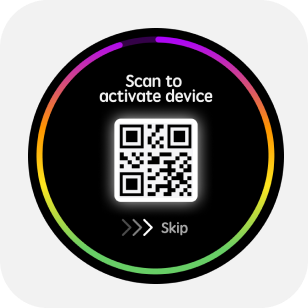
After selecting the language, a QR code appears. Use @Lab APP scan it to activate the device and calibrate the time.
1.4 Mode Menu
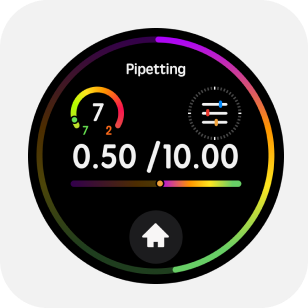
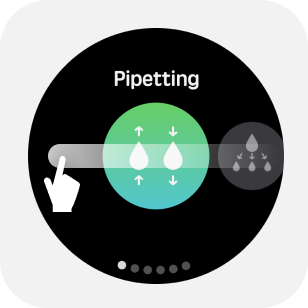
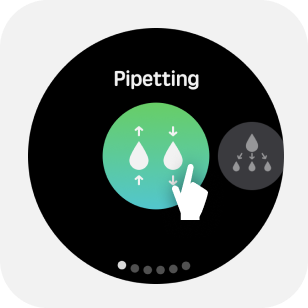
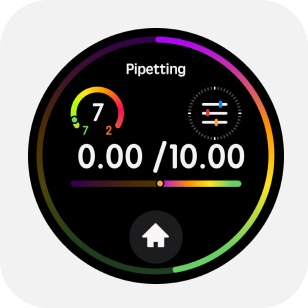
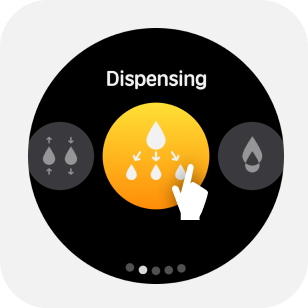
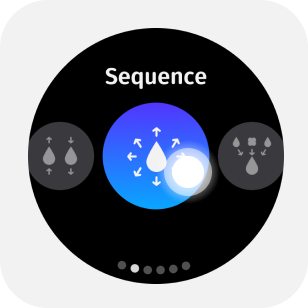
Tap the "Home" button on the main screen to enter the "Mode" menu.The mode menu includes Pipetting, Dispensing, Sequense,diluting, Reverse, Manual, Auto-Mix, Wireless and settings. Swipe the screen to switch modes, and tap the icon in the center of the screen to enter a mode.
1.5 Parameter Adjustment
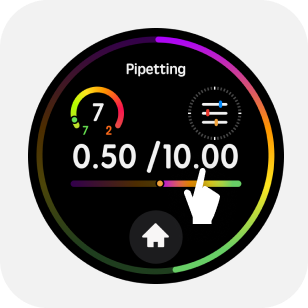
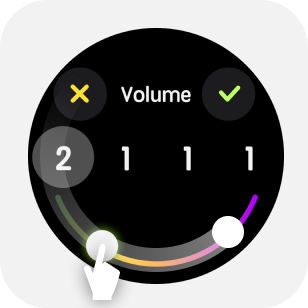
Tap the upper half of the main screen to enter the parameter menu.For example, to set the volume, swipe the edge of the screen to adjust the value.
Tap any number in the parameter adjustment to adjust that number individually.
1.6 Quick Operations
Long press the upper half of the main screen to enter quick volume adjustment.
2. General Operations
2.1 Install the Tip
Select a tip that matches the pipette's range, gently press, and insert the matching tip onto the nozzle.

2.2 Aspirate/Dispense Liquid
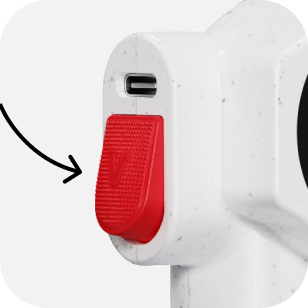
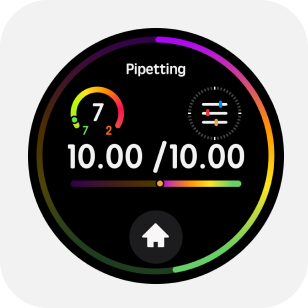
Press the trigger gently to perform the aspiration/dispensing operation.
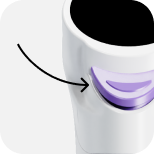
2.3 Quick Blow-out Under Dispensing Mode
Under dispensing mode, user can double click trigger button to blow-out all remaining liquid in tip.
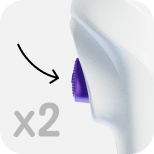
2.4 Tip-Ejection Button
While emptying the liquid, gently press the eject button to remove the tip.
2.5 Liquid Blow-Out
After completing the aspiration and dispensing cycle, double-click the trigger to blow out liquid.
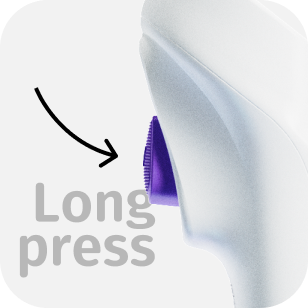
2.6 Mixing
If there is no liquid in the tip, Long press trigger button to perform liquid mixing.
Pipetting Mode
1. How to Use "Pipetting" Mode
The "Pipetting" mode can aspirate and dispense liquid at a variable volume.
1.1 Enter Pipetting Mode
Select Pipetting from the mode menu to enter Pipetting mode.
1.2 Parameter Adjustment
Tap the upper half of the main screen to enter the parameter menu. By swiping or tapping the screen, you can adjust in the parameter menu: aspirate/dispense volume, aspirate and dispense speeds, mixing volume, mixing speed, and blow-out option.

Once settings are complete, tap the "✔" on the screen or "Back" to confirm or return to the main page, or gently press the trigger button to confirm.
1.3 Start Pipetting
Press the trigger button lightly to start the aspiration/dispensing operation.
1.4 Blow-out
After completing the aspiration/dispensing cycle, double-tap the trigger button to blow out.
1.5 Mixing
If there is no liquid in the tip, Long press trigger button to perform liquid mixing.
1.6 Tip Ejection
Press down the tip ejection button to remove the tip.
"Dispensing" Mode
1. How to Use the Dispensing Mode
The equal volume dispensing mode allows multiple settings of the same volume, where liquid is aspirated and then dispensed in portions.
1.1 Enter Dispensing Mode
Select Dispensing from the mode menu to enter dispensing mode.
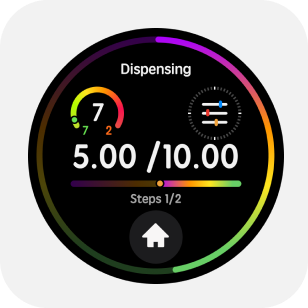
1.2 Parameter Adjustment
Tap the upper half of the main screen to enter the parameter menu.By swiping or tapping the screen, you can adjust in the parameter menu: total volume or aliquot volume, number of dispenses, aspirate and dispense speeds, mixing volume, mixing speed, blow-out option, and pre-dispense & tail volume on/off.
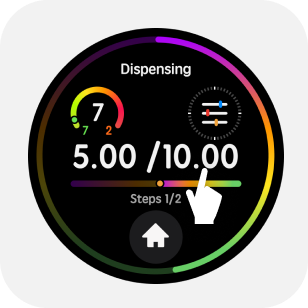
1.3 Start Dispensing
Gently press the trigger button to begin the aspiration/dispensing operation.
You can disable the pre-dispense and tail liquid in the parameter settings. This may affect accuracy, so choose according to your actual needs
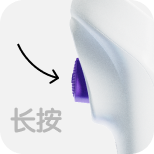
1.4 Quickly Empty Liquid
After performing the aspiration operation, hold the retract button to quickly dispense the liquid.
This operation method allows for greater freedom during dispensing work~
1.5 Blow Out Liquid
After completing the aspiration-dispensing cycle, double-click the trigger button to blow out the liquid.
1.6 Mixing
When there is no liquid in the tip, long press the trigger button to mix.
1.7 Eject the Tip
When the liquid is emptied, gently press the retract button to automatically eject the tip.
"Dilution" Mode
1. How to Use Dilution Mode
1.1 Enter Dilution Mode
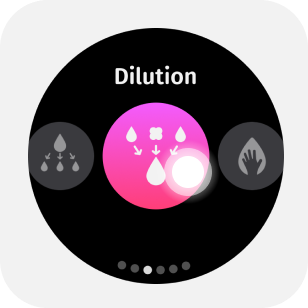
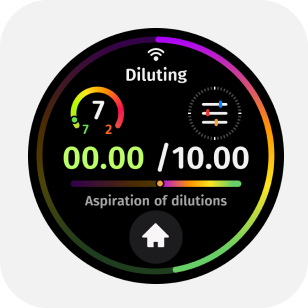
Select Dilution from the mode menu to enter Dilution Mode.
1.2 Parameter Adjustment
Tap the upper half of the main screen to enter the parameter menu.By swiping or tapping the screen, you can adjust in the parameter menu: diluent volume, air volume, sample volume, aspirate and dispense speeds, mixing volume, mixing speed, and blow-out option.
1.3 Start Liquid Transfer
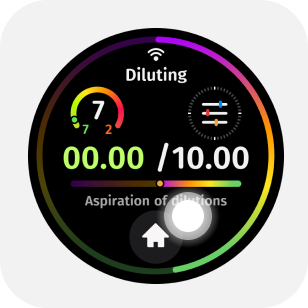
Press the trigger button lightly to begin the aspiration/discharge operation.
1.4 One-Button Liquid Discharge
After performing the aspiration operation, hold the discharge button to expel the liquid with one button.
This operation method allows for more freedom during liquid transfer.
1.5 Blow Out Liquid
After completing the aspiration and discharge cycle, double-tap the trigger button to blow out liquid.
1.6 Mixing
If there is no liquid in the tip, press and hold the trigger button to mix.
1.7 Eject the Tip
While discharging liquid, lightly press the discharge button for automatic tip ejection.
"Manual" Mode
1. How to Use Manual Pipetting Mode
1.1 Enter Manual Pipetting Mode
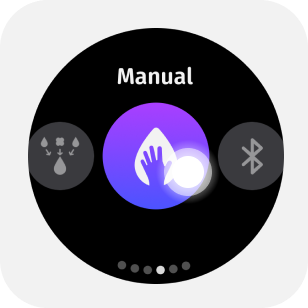
Select Manual Pipetting from the mode menu to enter manual pipetting mode.
1.2 Parameter Adjustment
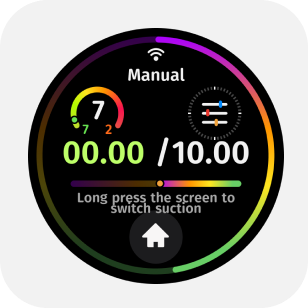
Tap the upper half of the main screen to enter the parameter menu.By swiping or tapping the screen, you can adjust in the parameter menu: aspirate/dispense volume, aspirate and dispense speeds, and blow-out option.
1.3 Start Pipetting
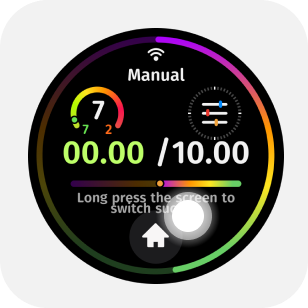
Press and hold the trigger button to begin the aspiration/discharge operation.
1.4 One-Button Liquid Emptying
After performing the aspiration operation, press and hold the discharge button to empty the liquid with one button.
This operation method allows for more freedom during dispensing work~
1.5 Switch Aspiration/Discharge Direction
Tap the centre of the screen to switch the aspiration/discharge direction.

1.6 Eject Pipette Tip
During liquid discharge, lightly press the discharge button to automatically eject the pipette tip.
1.7 Blow Out Liquid
The manual mode automatically enables the blow-out function and does not support double-click blow-out.

"Reverse" Mode
1. How to Use Reverse Pipetting Mode
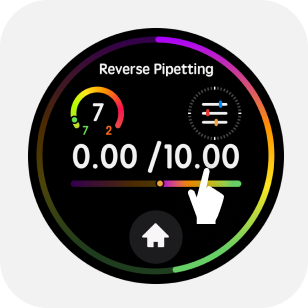
Reverse pipetting mode is suitable for viscous liquids, high protein content liquids, volatile liquids, etc. This mode works by aspirating more than the set volume; the first dispensing is the set volume, and the second dispensing is waste liquid.
1.1 Enter Reverse Pipetting Mode
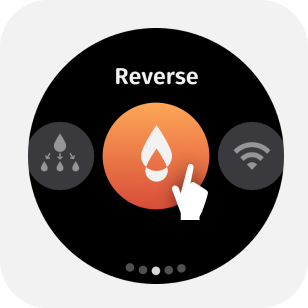
Select Reverse Pipetting from the mode menu to enter reverse pipetting mode.
1.2 Parameter Adjustment
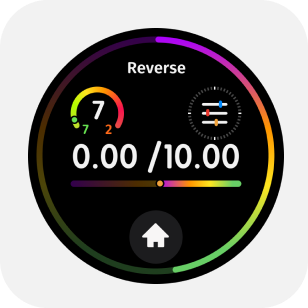
Tap the upper half of the main screen to enter the parameter menu.By swiping or tapping the screen, you can adjust in the parameter menu: aspirate/dispense volume, aspirate and dispense speeds, mixing volume, mixing speed, blow-out option, and repeat aspiration on/off.
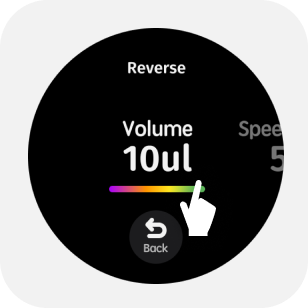
1.3 Start Pipetting
Press the trigger button to start the aspiration/dispensing operation.
To ensure each pipetting is more accurate, the smart pipette applies the principle of reverse aspiration, which allows the device to aspirate up to 10% more than the set pipetting volume. Therefore, after dispensing the fixed volume, further dispensing of the residual liquid is required to truly empty it.
1.4 One-Button Liquid Clearance
After performing the aspiration operation, press and hold the reverse aspiration button to clear the liquid with one button.
This operation method allows for more freedom during dispensing work~
1.5 Blow Out Liquid
After completing the aspiration and dispensing cycle, double-click the trigger button to blow out liquid.
1.6 Manual Mixing
If there is no liquid in the tip, press and hold the trigger button for manual mixing.
1.7 Eject Tip
While the liquid is being dispensed, lightly press the reverse aspiration button to electrically eject the tip.
"Sequence" Mode
1. How to Use Sequence Mode
1.1 Enter Sequence Mode
Select Sequence from the mode menu to enter sequence mode. continuousLiquid_2_en

1.2 Parameter Adjustment
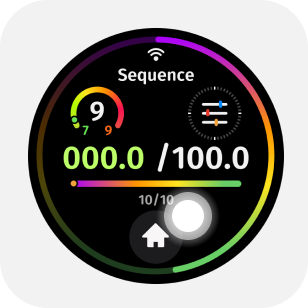
Tap the upper half of the main screen to enter the parameter menu.By swiping or tapping the screen, you can adjust in the parameter menu: total volume, aspirate and dispense speeds, mixing volume, mixing speed, blow-out option, and pre-dispense & tail volume on/off.
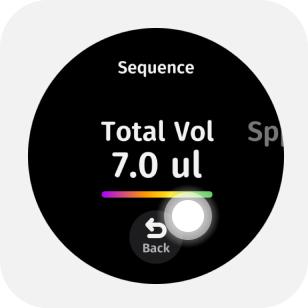
1.3 Set Different Step Volumes
Tap on the total sample volume to enter the step volume menu.
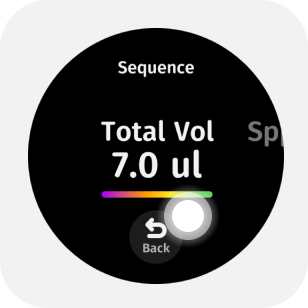
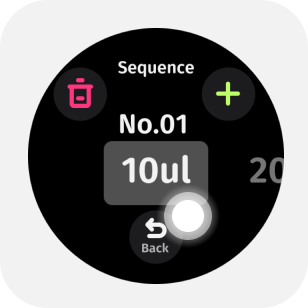
1.4 Delete or Add Step Volumes
Simultaneously click the '+' icon in the top right to continuously increase the number of dispensing steps.Tap the trash bin icon in the upper-left to delete the current volume.Tap the plus icon in the upper-right to add step volumes as needed.
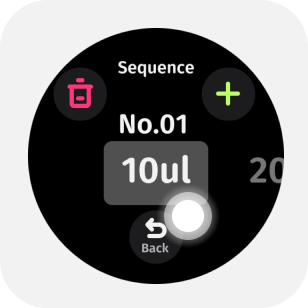


The smart pipette is equipped with intelligent calculation, which can automatically deduce the next volume parameter based on adjacent step volumes, easily achieving orderly increments or decrements of volume.
1.5 Start Pipetting
Press the trigger button to perform aspiration/dispensing.
Before officially starting dispensing, pre-dispense first; then sequentially press the trigger button to complete the dispensing process; after emptying the liquid, sequence is complete.
1.6 One-Button Liquid Clearance
After performing the aspiration operation, press and hold the reverse aspiration button to clear the liquid with one button.
This operation method allows for more freedom during dispensing work~
1.7 Blow Out Liquid
After completing the aspiration and dispensing cycle, double-click the trigger button to blow out liquid.
1.9 Manual Mixing
If there is no liquid in the tip, press and hold the trigger button for manual mixing.
1.9 Eject Tip
While the liquid is being dispensed, lightly press the reverse aspiration button to electrically eject the tip.
Automatic Mixing
1. How to Use Automatic Mixing Mode
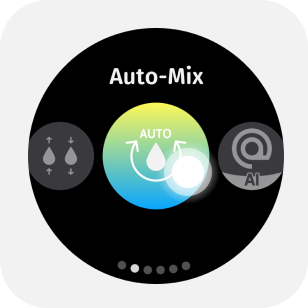
1.1 Enter Automatic Mixing Mode
Select Automatic Mixing from the mode menu to enter automatic mixing mode.

1.2 Parameter Adjustment
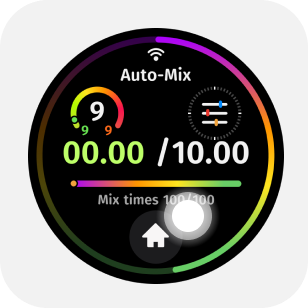
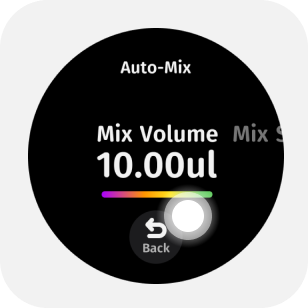
Tap the upper half of the main screen to enter the parameter menu.By swiping or tapping the screen, you can adjust in the parameter menu: mixing volume, number of mixes, and mixing speed.
1.3 Start Liquid Transfer
Press the trigger button lightly to start automatic mixing.
1.4 Pause Mixing
Long press the trigger button to pause mixing.
1.5 One-Click End Mixing
Click the eject button to end automatic mixing with one click.
This operation allows for more freedom during liquid dispensing.
1.6 Eject Tip
While emptying the liquid, lightly press the eject button to automatically remove the tip.
1.7 Blow Liquid
After completing the liquid transfer cycle, double-click the trigger button to blow liquid.
Charge
1. How to charge the device
The @Pette Mini smart pipette can be connected to a charger at any time. It can be charged via a power adapter, a power bank, or by connecting to a computer through the Type-C port. During charging, the display shows a charging screen with the battery percentage. A 15-minute charge supports several hours of pipetting; a full charging cycle takes about 40 minutes and provides over 3,000 aspirate/dispense cycles (the count is lower for high-volume models).
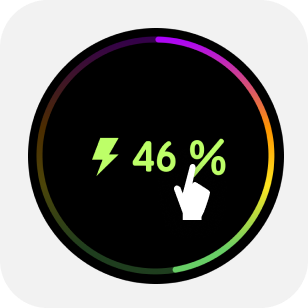
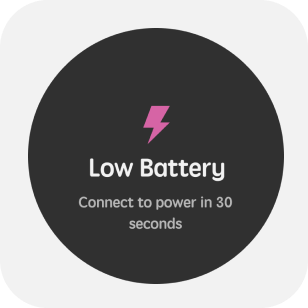
1.1 Dispensing While Charging
The @Pette Mini can perform operations during charging; while in charging mode, lightly touch the charging interface to return to the previous page before charging. If you need to handle liquids while charging, we recommend using the original charging device to power the pipette.The @Pette Mini can perform operations during charging; while in charging mode, lightly touch the charging interface to return to the previous page before charging. If you need to handle liquids while charging, we recommend using the original charging device to power the pipette.
1.2 Memory System, Power and Management Settings
All user input changes to the @Pette Mini settings and service mode data are stored in flash memory. Therefore, these contents will be preserved in case of battery failure or removal.
Usage Recommendations
1. Using pipettes
1.1 The use of pipettes should follow these guidelines:
- Set the pipette volume within the specified range and use compatible tips.
- To ensure accuracy, use high-quality, uncontaminated tips.
- Keep the immersion depth of the tip consistent or similar each time you aspirate.
- Maintain the pipette vertically or at an angle of no more than 20 degrees from vertical.
- Pre-wetting (1-3 times) the tip can improve pipetting accuracy.
- Never invert or lay the pipette flat when there is liquid in the tip. Always keep the instrument vertical and store it as vertically as possible.
- Liquid must not enter the areas that contact the piston or seal, as well as the electronic components including the display, trigger button, and eject button.
- Do not use corrosive solvents to clean the pipette. When cleaning, it is best to use a damp cloth (with diluted mild detergent) that is not cotton.
- Ensure that the display, trigger button, and eject button are dry.
The smart pipette is an advanced laboratory product that requires careful maintenance; please operate according to the guidelines.
1.2 Tip Immersion Depth
The immersion depth of the tip is critical. If it exceeds the recommended depth, the measured volume may be inaccurate and exceed standards. The angle of the tip is also important.
The recommended insertion depths for each model of sample are as follows:
| Volume Range | Immersion Depth |
|---|---|
| 0.1-1 µL | 1mm |
| 1-100 µL | 2-3mm |
| 100-1000 µL | 2-4mm |
1.3 Grip
@Pette Mini does not restrict your grip position; you can choose any grip style you prefer for holding the pipette.
2. Possible Causes of Malfunction and Solutions
| Issue | Possible Cause | Suggested Solution |
|---|---|---|
| Tip ejector does not reset after ejection | System failure or spring malfunction | Contact customer service for inspection; the tip ejector reset spring may need to be replaced if necessary. |
| Screen touch failure | System failure. Dropping or impact may cause the connector to come loose or the screen module to be damaged. | Please contact customer service for inspection; the screen module may need to be replaced if necessary. |
| Button failure | System failure. Forcefully pressing the aspirate/dispense button may cause the button to malfunction. | Contact customer service for inspection; the button or securing components may need to be replaced if necessary. |
Disassembly Recommendations
1. How to disassemble?
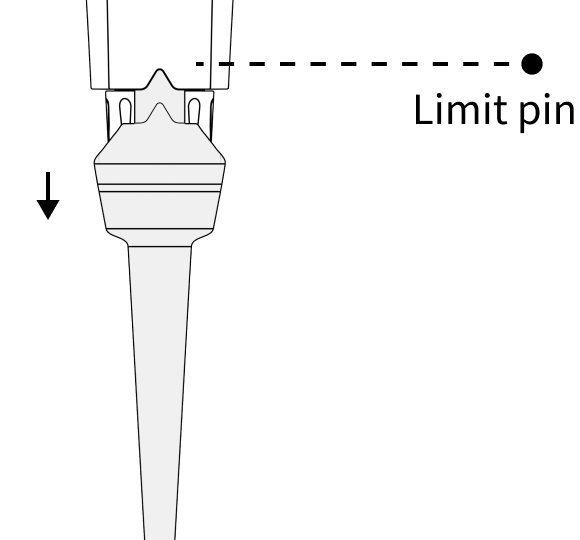
1.1 Remove the limit pin
Pull down the limit pin to detach it from the upper limit hook.
1.2 Unscrew the connecting bolt
Rotate the connecting bolt counterclockwise until it is completely detached from the upper fixed thread.

1.3 Separate the lower part
Gently pull down the lower part of the pipette to separate the internal magnetic connection structure.

Follow the disassembly recommendations provided in this manual, otherwise, the pipette may be damaged.
About Warranty
1. Basic Information on Product Warranty
Thank you for purchasing a Shuye product. If you encounter any performance faults not caused by human damage during the use of the product, you are entitled to Shuye's worry-free after-sales service commitment. To protect your rights, please keep the purchase receipt and invoice safe after buying Shuye products. The warranty period for the product will start from the date you activate the product (hereinafter referred to as "activation"), and the warranty period is 24 months.
If the product malfunctions, please contact Shuye after-sales support directly.
1.1 Worry-Free After-Sales Service Content
- Within 15 days from the date of activation, the product can be replaced with products of the same model and specification if no one is damaged.
- Within 15 days from the date of activation, if the product has a performance fault without human damage, it can be replaced with a product of the same model and specifications.
- During the warranty period, if the product cannot be used normally after two replacements, and after confirmation by Shuye, you may choose to repair or replace it with a product of the same model and specifications, provided you have a valid replacement record from the seller in your warranty certificate.
1.2 Situations Not Covered by Warranty
- The product is beyond the warranty period;
- The warranty certificate does not match the product model;
- Products without Shuye branding;
- The accessory was not purchased from Shuye or an authorized dealer;
- Product cleaning or normal maintenance;
- Unauthorized repairs, modifications, misuse, collisions, compression, or liquid ingress;
- Damage caused by accidents, abuse (including exceeding workload), or misuse;
- Damage caused by improper storage (such as rodent damage, liquid ingress, etc.);
- Damage caused by using self-compiled or non-publicly released software that prevents the product from functioning normally;
- Damage caused by force majeure such as floods, fires, or lightning;
- Defects caused by normal wear and tear or aging of the product;
- Shuye products not sold in mainland China.
1.3 Special Reminder
The above terms outline all responsibilities of Shuye regarding the product and replace all other express and implied guarantees and responsibilities. When the product does not work properly, Shuye's responsibility to the user is limited to repairing and replacing the product according to the above terms. Beyond this, there are no other guarantees. If applicable national laws provide otherwise, Shuye will comply with the law.
Regardless of the reason for the user's inability to use Shuye products normally, Shuye is only liable for the responsibilities required by applicable national laws.
Under no circumstances shall Shuye be liable for losses caused by the user's product loss, damage to intangible assets such as data records, materials, and/or programs; or losses caused by third-party compensation claims against the user.
1.4 Product After-Sales Service Commitment Schedule
| Product Type | Warranty Period |
|---|---|
| Pipette | 24 months |
Random accessories such as power supplies and power cords are not covered by the warranty. | |
Product Testing
1. Single Channel Model Accuracy Report
| @Pette pro Single-channel measurements | JJG 646-2006 Standard Requirement | |||||
|---|---|---|---|---|---|---|
| item number | Range/μL | calibration point | systematic error | random error | systematic error | random error |
| 0110-0010 | 0.5μL-10μL | 1 μL | ±4% | ≤2.31% | ±12.0% | ≤6.0% |
| 5 μL | ±1% | ≤0.6% | ±8.0% | ≤4.0% | ||
| 10 μL | ±0.8% | ≤0.5% | ±8.0% | ≤4.0% | ||
| 0110-0100 | 5μL-100μL | 10 μL | ±2% | ≤0.31% | ±8.0% | ≤4.0% |
| 50 μL | ±0.8% | ≤0.16% | ±3.0% | ≤1.5% | ||
| 100 μL | ±0.5% | ≤0.1% | ±2.0% | ≤1.0% | ||
| 0110-0200 | 20μL-200μL | 20 μL | ±1% | ≤0.3% | ±4.0% | ≤2.0% |
| 100 μL | ±0.5% | ≤0.15% | ±2.0% | ≤1.0% | ||
| 200 μL | ±0.5% | ≤0.1% | ±1.5% | ≤1.0% | ||
| 0110-0300 | 30μL-300μL | 50 μL | ±0.5% | ≤0.23% | ±3.0% | ≤1.5% |
| 150 μL | ±0.6% | ≤0.12% | ±2.0% | ≤1.0% | ||
| 300 μL | ±0.38% | ≤0.12% | ±1.5% | ≤1.0% | ||
| 0110-1000 | 50μL-1000μL | 100 μL | ±0.8% | ≤0.1% | ±2.0% | ≤1.0% |
| 500 μL | ±0.4% | ≤0.08% | ±1.0% | ≤0.5% | ||
| 1000 μL | ±0.25% | ≤0.09% | ±1.0% | ≤0.5% | ||
The above test data are averages from multiple repeated tests conducted under specific environmental conditions at Shuye Laboratory.
2. Eight Channel Model Accuracy Report
| @Pette Pro Eight-channel measurements | JJG 646-2006 Standard Requirement | |||||
|---|---|---|---|---|---|---|
| item number | Range/μL | calibration point | systematic error | random error | systematic error | random error |
| 0111-0010 | 0.5μL-10μL | 1 μL | ±5% | ≤2.83% | ±12.0% | ≤6.0% |
| 5 μL | ±1.4% | ≤0.93% | ±8.0% | ≤4.0% | ||
| 10 μL | ±1% | ≤0.63% | ±8.0% | ≤4.0% | ||
| 0111-0100 | 5μL-100μL | 10 μL | ±2.2% | ≤0.76% | ±8.0% | ≤4.0% |
| 50 μL | ±1.1% | ≤0.18% | ±3.0% | ≤1.5% | ||
| 100 μL | ±0.6% | ≤0.1% | ±2.0% | ≤1.0% | ||
| 0111-0200 | 20μL-200μL | 20 μL | ±1.2% | ≤0.35% | ±4.0% | ≤2.0% |
| 100 μL | ±0.6% | ≤0.2% | ±2.0% | ≤1.0% | ||
| 200 μL | ±0.6% | ≤0.2% | ±1.5% | ≤1.0% | ||
| 0111-0300 | 30μL-300μL | 50 μL | ±0.7% | ≤0.28% | ±3.0% | ≤1.5% |
| 150 μL | ±0.42% | ≤0.15% | ±2.0% | ≤1.0% | ||
| 300 μL | ±0.37% | ≤0.14% | ±1.5% | ≤1.0% | ||
| 0111-1250 | 50μL-1250μL | 125 μL | ±1% | ≤0.2% | ±2.0% | ≤1.0% |
| 625 μL | ±0.5% | ≤0.15% | ±1.0% | ≤0.5% | ||
| 1250 μL | ±0.3% | ≤0.15% | ±1.0% | ≤0.5% | ||
The above test data are averages from multiple repeated tests conducted under specific environmental conditions at Shuye Laboratory.
3. Product Test Report
Names and contents of harmful substances in the product
| Component Name | Lead (Pb) | Mercury (Hg) | Cadmium (Cd) | Hexavalent Chromium (Cr⁶+) | Polybrominated Biphenyls (PBB) | Polybrominated Diphenyl Ethers (PBDE) |
|---|---|---|---|---|---|---|
| Circuit Board | ○ | ○ | ○ | ○ | ○ | ○ |
| Motor | ○ | ○ | ○ | ○ | ○ | ○ |
| Display Screen | × | ○ | ○ | ○ | ○ | ○ |
| Battery Pack | × | ○ | ○ | ○ | ○ | ○ |
| Power Adapter | ○ | ○ | ○ | ○ | ○ | ○ |
| Data Cable | ○ | ○ | ○ | ○ | ○ | ○ |
This table is prepared in accordance with SJ/T 11364 regulations.
◯: Indicates that the content of the harmful substance in all homogeneous materials of the component is below the limit requirements specified in GB/T 39560.
✕: Indicates that the content of the harmful substance in at least one homogeneous material of the component meets or exceeds the limit requirements specified in GB/T 39560. The marking "✕" on components is due to the limitations of industry technology development that prevent the substitution of harmful substances.

This product and some of its internal or external components may carry an environmental usage period label. Depending on the components and their manufacturers, the usage period labels on the product and its components may vary. The usage period label on the component takes precedence over any conflicting or different environmental usage period labels on the product.
Frequently asked question
1. Q&A | Technical Related
1.1 What is the main difference between electric pipettes and smart pipettes?
- Electric pipettes simplify the pipetting process compared to mechanical pipettes, improving handling efficiency, with higher precision and repeatability, reducing operator fatigue.Shuye smart pipettes, based on electric pipettes, offer faster and richer operating functions, featuring AI smart interaction, data management, connectivity, automation expansion, and other outstanding characteristics.
1.2 What is "Taylor-style" self-calibration?
- It is an innovative self-calibration technology of the PetteOS system, supported by both hardware and software. The Shuye smart pipette has built-in calibration components that, in conjunction with PetteOS, can achieve automatic calibration after each aspiration and dispensing without external intervention. Similar to Taylor expansion, it distributes periodic calibration tasks across each aspiration and dispensing operation, achieving fully automatic calibration for each pipetting.
1.3 What are the specific features of smart pipettes?
- The Shuye smart pipette is equipped with the PettOs system, utilizing ARM architecture chips and integrating multiple driving algorithms, enabling various seamless connection modes.The Pro series supports: NFC wireless data reading, which helps you manage permissions, inventory checks, and export pipette-related information; Bluetooth wireless control, allowing you to control the pipette via mini-programs and tablets, and also supports automation expansion, such as automated pipetting workstations and pipetting plate kits.The Mini series, in addition to supporting Bluetooth wireless connection, has a built-in AI voice interaction model, allowing users to adjust pipette parameters, switch modes, and even set voice memos, alarms, and logical Q&A through voice commands.
1.4 Why is there no shortcut key for shutdown?
- The Shuye smart pipette has a function to automatically shut down after a long period of inactivity (3-30 minutes), and the automatic shutdown time is adjustable. It also features strong battery life and fast charging, so you do not need to perform a special shutdown operation after pipetting.The Mini series can be shut down via voice control; you can press and hold the voice button and say: "Shut down."
1.5 How can I check the remaining battery?
- The working interface when starting pipetting and the light ring displayed when the charger is plugged in indicate the remaining battery.
1.6 What could be the reason for the tip not ejecting?
- Shuye pipettes use universal tip technology and have excellent compatibility; with support from both software and hardware, electric tip ejection has also been achieved. Currently, there are many types of tips on the market, and the variety of processes is rich. When matching tips with less obvious limits, if you apply too much force, causing abnormal deformation of the tip, it may be difficult to eject. It is recommended to use appropriate force and standardized operations to take the tips.
1.7 Why is there occasionally residue after dispensing?
- Due to the effects of liquid surface tension, viscosity, and tip adhesion, there may be residue during aspiration and dispensing. Considering this, we have designed a blow-out procedure, which you can perform based on actual needs. Additionally, it is recommended to use low-adhesion tips to reduce the impact of the tips themselves; when handling special liquids, using reverse pipetting mode can achieve more accurate pipetting results.
1.8 What should I do if liquid is drawn back after performing the blow-out?
- After performing the blow-out operation, due to motor reset, a backflow phenomenon may occur.You can double-click the trigger button and hold it down until the tip leaves the liquid surface, then release it to delay the motor reset.Alternatively, users can enable the anti-backflow mode in the settings under "Blow". When this mode is activated, the motor will not reset automatically after the pipette has completed the blowout. The user will need to manually press the aspirate/discharge button after the pipette tip is clear of the liquid surface to reset the motor, which greatly reduces the risk of liquid backflow.
1.9 In the dispensing mode, is the discarded pre-dispensed liquid and tail liquid volume included in the set total volume?
- No, the dispensing mode of the Shuye smart pipette will automatically aspirate liquid greater than the preset volume, discarding the first and last liquid to improve dispensing accuracy.Users can also choose whether to include the pre-aspirated and tail liquid in the settings under "Pre&Tail". If this option is turned off, the pipette will not aspirate excess liquid beyond the preset volume during dispensing and will perform the dispensing directly. However, this may affect the accuracy of dispensing, so please adjust according to your specific needs.
1.10 What should I do if there is suspended liquid during the dispensing operation?
- Due to surface tension of the liquid, there may be a drop of suspended liquid after each dispensing when performing small volume liquid dispensing operations. If this occurs, it is recommended to lightly touch the liquid surface or the tube wall to let the suspended drop enter the current dispensing.
1.11 What do the values of the three calibration points mean?
- The three-point calibration method tests six times at three points selected based on the pipette's range: 10%, 50%, and 100% of the maximum range, taking the average value of each test point. The values of the three calibration points are the average values of the three measured detection points, representing the actual volume of the pipette, and the system will adjust based on the calibration point data to ensure that the volume you aspirate matches the displayed volume.
1.12 Why can't I connect the pipette after scanning the QR code on on WeChat or APP?
- The Shuye smart pipette connects to the "Shuye Pipette Assistant" on WeChat or APP via Bluetooth, so you need to ensure that the pipette's Bluetooth, your phone's Bluetooth, and WeChat or APP's Bluetooth permissions are enabled.
1.13 How do I disinfect and sterilize the pipette?
- The Shuye smart pipette Pro series has a detachable lower part that supports high-pressure heating sterilization at 121°C for 15-20 minutes. Do not high-pressure heat any parts other than the pipette or the tip ejector.The Shuye smart pipette Pro and Mini series support alcohol spraying and UV sterilization for the entire pipette.
1.14 Do I need to calibrate the pipette regularly?
- The Shuye smart pipette has a built-in self-developed "Taylor" self-calibration system, with the Pro series achieving automatic reset after each pipetting, and the Mini series achieving cloud calibration at each startup. Each pipette is calibrated according to JJG646-2006 and ISO 8655 standards before leaving the factory, and a factory calibration report is provided.However, due to the frequency of pipette use, the types of liquids handled, and the user's usage methods, it is recommended that you perform proactive calibration maintenance using the system's built-in three-point calibration system every six months to a year to ensure your pipette remains at a high precision level. For specific operations, you can refer to the calibration operation demonstration video on the official website. If you have any questions, feel free to contact us!
1.15 What type of tips should I choose?
- The pipetting system consists of two parts: the pipette and the tips, and the quality of the tips significantly affects the accuracy of pipetting. Shuye pipettes use universal tip technology and have excellent compatibility, so it is recommended that you choose high-quality tips with low adhesion and no contamination based on the experimental scenario to achieve more precise pipetting.
1.16 How long does it take to fully charge the Shuye smart pipette? How long can it be used after charging?
- The @Pette Pro uses fast charging mode, taking only 1 hour to fully charge. In a fully charged state, it can perform over 4000 aspiration and dispensing cycles. Additionally, the @Pette Pro supports using while charging and has a battery protection mechanism for overnight charging, helping you say goodbye to power anxiety.The @Pette Mini also uses fast charging mode, taking only 40 minutes to fully charge. In a fully charged state, it can perform over 3000 aspiration and dispensing cycles. The @Pette Mini also supports using while charging and has a battery protection mechanism for overnight charging, helping you say goodbye to power anxiety.
2. Q&A | Principles and Applications
2.1 How does the @Pette work?
- The @Pette pipette is an innovative upgrade based on electric pipettes, enhancing the user experience with the latest generation of intelligent connectivity. It interacts seamlessly and efficiently with users through built-in pipetting system software, utilizing various driving algorithms to control high-precision motors for operations such as aspiration, dispensing, aliquoting, mixing, and tip ejection, thereby improving user experience, increasing work efficiency, and reducing work-related strain. Additionally, as it is motor-driven, the speed of aspiration, dispensing, and mixing becomes highly controllable, catering to the personalized needs of different experimental protocols. The smart pipette can also connect wirelessly or via wired interfaces to external components, expanding its functionalities. It can leverage intelligent connectivity for device scanning registration, calibration information operation log export/viewing.
2.2 What are the use cases for the @Pette?
- Pipettes are commonly used laboratory tools in fields such as life sciences, biomedicine, and chemical analysis, capable of accurately dispensing and transferring small volumes of liquid samples. In laboratories, pipettes are widely applied in areas such as PCR reactions, protein analysis, cell culture, genetic engineering, and high-throughput screening, covering the entire process from sample preparation to sample analysis.
3. Q&A | After-Sales Service
@Pette Technology offers a comprehensive range of business services including: maintenance, training, application support, technical support, and assistance.
3.1 Can I request @Pette to recalibrate the pipette after purchase?
- We are happy to provide various calibration services to calibrate your pipette according to standards. You can contact our service team through the following means to inquire about any issues you may encounter.Email: service@vecverse.com
3.2 What is the warranty period for the @Pette smart pipette?
- For any quality issues within 2 years, all return shipping costs will be covered by @Pette.*Excluding charging cables and chargers.For pipettes within the warranty period, if they are damaged due to misuse of physical or chemical substances, or if they have been repaired or recalibrated by any service organization not authorized by Hangzhou @Pette Technology Co., Ltd., the warranty will be void.
Accessory Installation
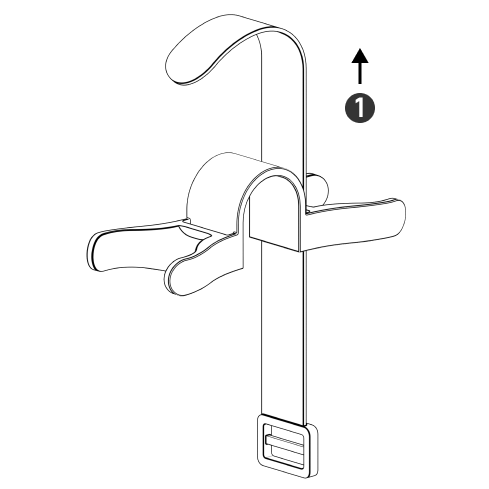
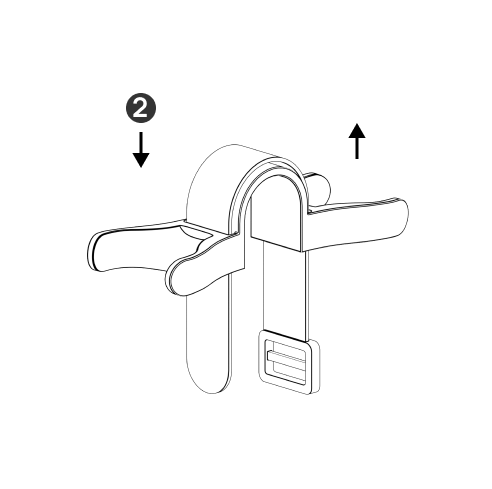
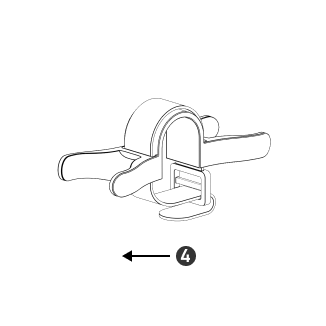
How to use the charging dock and straps?
1. Component Introduction


2. Step-by-Step Introduction